How a Pizza Restaurant Handles Catering With Ease
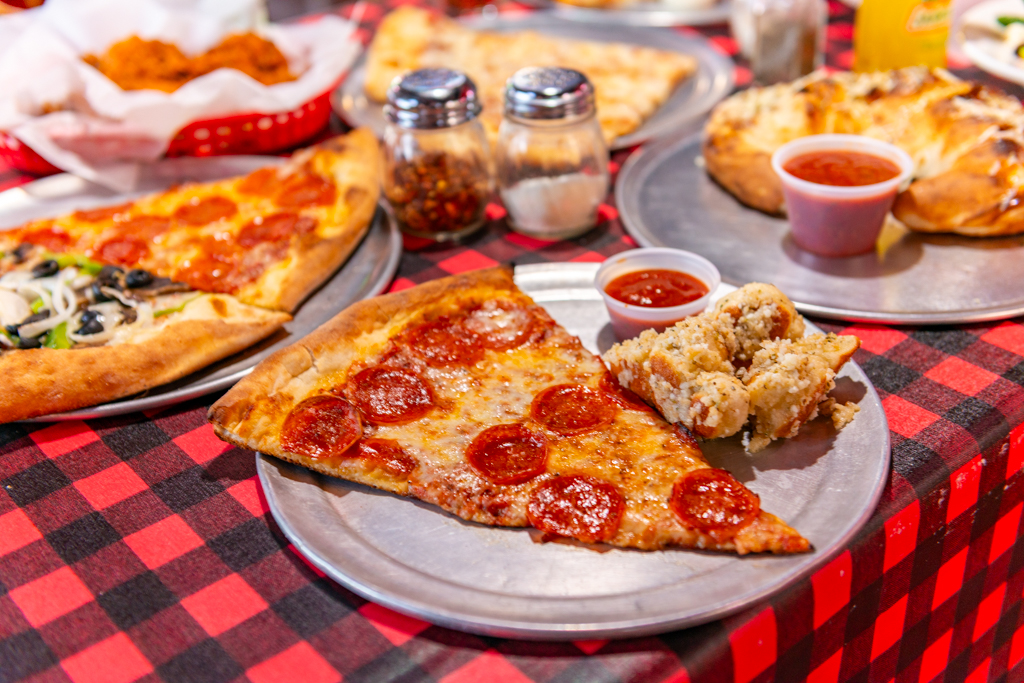
Catering looks simple from the dining room. A customer calls, asks for food for thirty, fifty, sometimes two hundred guests, and expects everything to arrive hot, organized, and ready to serve. For a pizza restaurant, that request can be a gift or a headache. It depends on what happens after the phone pizza restaurant rings.
The restaurants that make catering feel easy are rarely winging it. They have built quiet systems behind the counter, trained people to think two steps ahead, and learned where pizza travels well and where it does not. They know that a school lunch order behaves differently than an office luncheon, and a wedding after-party has little in common with a youth sports banquet. The product may be pizza, but the job is logistics.
When a pizza restaurant gets catering right, customers tend to remember it. Pizza is familiar, generous, and easy to share. It suits birthdays, team events, church functions, office meetings, graduation parties, and fundraisers. It also carries risk. One late order can derail a presentation. One mislabeled tray can leave a vegetarian guest with no meal. One stack of boxed pies left without serving plates can turn a polished event into a scramble.
Handling catering with ease comes down to discipline, not luck.
The first win happens before a single pie is made
Most catering problems start with bad order intake. A rushed employee hears "twenty pizzas at noon" and thinks the job is done. It is not. Serious catering begins with asking the right questions and writing down the answers in a way the kitchen, delivery team, and customer can all trust.
A seasoned manager will pin down the event type, guest count, delivery address, access instructions, serving time, dietary restrictions, tax-exempt status if relevant, contact names, and payment terms. They will ask whether the order is for drop-off or full setup. They will ask if the customer needs salads, drinks, desserts, paper goods, chafing equipment, warming bags, or labeled boxes. They will ask whether the location has an elevator, loading dock, security check-in, or limited parking. These details sound small until a driver is hauling thirty boxes into a downtown office tower at 11:55 a.m.
The good pizza restaurant also guides the customer when the order itself does not make sense. This is where experience shows. If someone orders ten large pizzas for sixty adults, staff should step in. If a school asks for heavy garlic and spicy toppings for younger children, someone should suggest a milder mix. If a law office books lunch for a deposition and wants food to stay tidy, pre-cut slices and individually boxed salads may be better than a buffet-style spread.
Customers usually appreciate this kind of guidance. It tells them they are dealing with professionals, not just order takers.
Catering menus work because they are edited, not expanded
A common mistake is assuming the entire dine-in menu should be available for catering. That sounds customer-friendly, but in practice it creates confusion, slows production, and increases the odds of error. The best catering menus are narrower than the regular menu. They focus on items that travel well, hold quality for a reasonable window, and can be produced in volume without wrecking service for dine-in and takeout guests.
Pizza restaurant operators learn quickly that not every great menu item survives a twenty-minute drive or a forty-minute hold before guests eat. Thin-crust pizzas can lose texture if stacked carelessly. Delicate salads wilt if dressed too early. Fried appetizers soften fast. Pasta can be an excellent catering item, but only if portioning, saucing, and holding procedures are dialed in. Even something as ordinary as breadsticks becomes complicated at scale if they are packed too tightly and steam turns them rubbery.
That is why smart operators build a catering menu around reliability. Large-format pizzas, pasta trays, sturdy salads, baked wings, dessert trays, and beverage packages tend to earn their place because they repeat well. The menu may still offer customization, but within boundaries the kitchen can execute consistently.
There is a practical financial upside too. A tighter catering menu helps purchasing, prep, and labor forecasting. If a restaurant knows its high-volume catering orders usually revolve around pepperoni, cheese, veggie, Caesar salad, and baked ziti, inventory becomes more predictable. Waste drops. Speed improves. Margins usually look healthier.
Timing is where catering is won or lost
A pizza restaurant can make excellent food and still fail at catering if it does not control timing. Guests may forgive a slightly imperfect crust. They rarely forgive lunch arriving forty minutes late.
Ease comes from backward planning. If an office asks for food at 12:00 p.m., the restaurant does not merely put "noon delivery" on a ticket. It calculates travel time, loading time, boxing time, oven schedule, traffic conditions, and any site-specific obstacles. For a large order, food may need to come out in waves so the first pizzas are not sitting too long while the last batch finishes. Pasta might be cooked and held differently than dine-in portions. Salads may be packed at the last possible minute. Drivers may leave earlier than the distance alone suggests because parking and building access can eat ten or fifteen minutes unexpectedly.
Experienced managers also protect the kitchen from collision points. Friday at 6:30 p.m. May be a terrible time for a seventy-pizza catering pickup unless the restaurant has a separate production line or additional oven capacity. A school pizza day at 11:15 a.m. May crash into the everyday lunch rush if staffing is thin. Ease often means saying yes carefully, not automatically.
There is a judgment call here that newer operators sometimes miss. Not every catering order is good business. If one giant order overwhelms regular service, creates bad wait times, and burns out the staff, the revenue boost may not be worth it. Strong restaurants know their ceiling. They would rather decline a poorly timed order than gamble the day.
Production gets smoother when the kitchen thinks in zones
Inside the kitchen, catering should not feel like an oversized version of normal service. It needs its own flow. When a pizza restaurant handles this well, team members know exactly where each part of the order lives from prep to dispatch.
One useful approach is zoning. Dough production, topping assembly, baking, boxing, cold-side prep, and final staging each have a defined area. Labels matter. So do order packets, color coding, and clear timestamps. Large catering jobs can unravel when boxes are spread across counters with scribbled notes and nobody is certain whether the gluten-free pies have been packed or the ranch cups were added.
I have seen the difference a simple staging table makes. In one operation, catering orders were assembled wherever space happened to open up, often beside standard takeout tickets. Predictably, sauces disappeared, labels were inconsistent, and drivers had to ask three people whether the order was complete. In another shop, large orders moved to a dedicated table with printed check sheets, customer name, departure time, and a pack-out sequence taped to the top. That restaurant looked calmer because it was calmer.
A short checklist can save a costly remake or a second trip:
- verify item count against the final invoice
- confirm labels for specialty diets and modified pizzas
- pack paper goods, utensils, plates, and serving tools if ordered
- check sauces, dressings, and beverages separately
- assign the order to a driver with the correct departure time
That level of discipline is not glamorous, but it keeps the customer from calling ten minutes into the event asking where the salads are.
Delivery is part of the product
Many restaurants treat delivery as a handoff. In catering, delivery is part of the meal. The customer judges the experience not only by taste, but by how the order arrives, how it is carried in, and whether the setup makes sense.
A professional catering drop looks organized from the first contact. The driver or catering lead confirms arrival with the on-site contact, brings the order in with purpose, places items in a logical serving order, and reviews the setup briefly before leaving. Boxes are not dumped on the nearest table. Cold items are separated from hot ones. Labels face outward. Drinks and paper goods are easy to spot. If the event calls for it, the restaurant provides racks, stands, or warmers.
This is where training matters more than personality. A friendly driver who forgets half the order is not delivering good service. A quieter driver who checks the invoice, confirms the room location, and notices that the customer forgot to request plates but clearly needs them may save the day. Good operators train drivers to think like hosts, not couriers.
Transport equipment matters too. Insulated carriers, pizza bags that actually close properly, cambros for pasta, and secure beverage containers are basic tools, not luxury upgrades. So are nonslip mats and vehicle organization. If your delivery car becomes a sliding pile of soda and garlic knots every time the driver brakes, the problem is not the road.
Packaging deserves more respect than it gets
Packaging often sits in the background until it fails. Then everybody notices. Soggy boxes, leaking pasta trays, unlabeled salads, and flimsy lids can make a strong kitchen look careless.
For pizza restaurant catering, packaging should solve three problems at once: maintain temperature, preserve product quality, and simplify service at the event. This requires more than standard takeout boxes in many cases. Vented boxes may help reduce steam buildup. Heavier aluminum trays may be worth the cost for larger pasta orders. Salad components may need to be packed separately if the travel window is long. Certain toppings, especially fresh herbs or delicate greens, are sometimes better added on-site or packed in a family pizza restaurant side cup.
Clear labeling is one of the cheapest upgrades a restaurant can make. A box marked only with initials may mean something to the line cook and nothing to a conference organizer trying to set lunch for eighty employees. Labels should be obvious: cheese, pepperoni, veggie, no pork, gluten-free, no onions, dairy-free, and so on. The same goes for dressings and sauces. When customers can set up quickly without opening every container, the entire service feels smoother.
There is also a brand effect here. Neat packaging communicates competence. That matters, especially with corporate clients who order repeatedly and compare vendors quietly.
Staffing for catering means planning the hidden labor
Owners sometimes underprice catering because they count only the food and a rough delivery fee. Real catering labor starts earlier and ends later than many expect. Someone takes the order, confirms it, schedules it, preps for it, stages it, loads it, delivers it, sets it up, and often follows up afterward. On very large jobs, somebody may also need to manage equipment returns or on-site service issues.
A pizza restaurant that handles catering with ease builds those labor demands into staffing. On big days, prep starts differently. Dough may need to be scaled for high-volume production windows. Cold prep may happen earlier, but not so early that quality slips. A senior expeditor may be assigned specifically to catering rather than bouncing between all order channels. Drivers may need staggered dispatch schedules. If there is a setup component, the labor model should include setup time, not just drive time.
Cross-training helps enormously. When only one employee knows how to handle a catering invoice or stage a multi-order delivery route, the whole system becomes fragile. Restaurants that do this well spread the knowledge around. A manager can step into production. A lead cook can read a catering packet. A driver understands setup expectations. That flexibility is often what keeps a busy Saturday from turning into chaos.
The customer experience continues after delivery
Repeat catering business rarely depends on one perfect pizza. It depends on whether the overall experience reduced stress for the buyer. That means communication before and after the event matters almost as much as the food.
Confirmation should be clean and specific. Customers should know what they ordered, what time it will arrive, how much it costs, and who to contact if something changes. For larger jobs, a confirmation call or message the day before can catch mistakes early. Event planners are busy. They appreciate a restaurant that checks the details without creating extra friction.
After the event, follow-up can be simple but useful. A brief note asking whether timing, setup, and quantities worked well gives the restaurant real information. Sometimes the most valuable feedback has nothing to do with flavor. A customer may say the food was great but the drinks were hard to find, or the boxes were not labeled clearly enough for dietary needs, or the delivery needed ten extra minutes because the building required security clearance. Those details turn into better systems.
Loyal catering accounts are built in these moments. Schools, offices, sports leagues, churches, and local organizations often reorder from the place that makes their life easiest, not necessarily the place with the most elaborate menu.
Large orders expose every weak spot, which is useful
One benefit of catering is that it reveals operational truth. A pizza restaurant may feel efficient on routine nights, but a single seventy-five-person lunch order can expose issues in prep, communication, storage, oven capacity, and staffing. That is not a reason to avoid catering. It is a reason to learn from it.
If salads are always the last thing packed and often forgotten, the staging sequence needs work. If giant office deliveries consistently arrive too early because drivers are eager to beat traffic, holding procedures or dispatch timing may need adjusting. If phone staff struggle to quote catering accurately, the menu design may be too loose. If every large order creates panic, the restaurant probably lacks clear production roles.
The best operators treat these failures as process problems first. Blaming a single employee may feel satisfying, but it rarely fixes the system. Smooth catering comes from repeatable habits, good documentation, and realistic capacity planning.
Ease is visible to the customer, but it is built in the back
When people say a pizza restaurant handles catering with ease, they usually mean the experience felt effortless from their side. The food showed up hot. The counts were right. The setup made sense. Nobody had to chase missing items. The order simply worked.
What they do not see is the structure behind that ease. A focused catering menu. Careful order intake. Capacity limits. Well-timed prep. Thoughtful packaging. Trained drivers. Clear staging. Follow-up that captures useful feedback. None of it is complicated in isolation. The advantage comes from doing all of it consistently.
For operators, that is the real lesson. Catering is not a side hustle tacked onto regular service. In a well-run pizza restaurant, it is a separate discipline with its own standards. Once those standards are in place, large orders stop feeling disruptive. They become predictable, profitable, and far less stressful for everyone involved.
And for customers, that reliability is what keeps the phone ringing. When people find a pizza restaurant that can feed a crowd without drama, they tend to come back. Not because pizza is easy, but because the restaurant made it look that way.
Ruffrano's Hell's Kitchen Pizza Manitou Springs
9 Ruxton Ave, Manitou Springs, CO 80829
Phone: +1 719-685-4355
FAQ About pizza restaurant
Is There a Hell's Kitchen Pizza Restaurant in Manitou Springs?
Yes. Ruffrano's Hell's Kitchen Pizza Manitou Springs is located at 9 Ruxton Ave, Manitou Springs, CO 80829. Call +1 719-685-4355 to confirm current ordering and dining arrangements.
How Spicy Is a "Hellfire" Style Pizza Really?
The menu lists hot Italian sausage, pepperoni, cherry peppers and Hellfire sauce on the Hellfire pizza. Heat tolerance varies, so ask the restaurant about the sauce and possible adjustments before ordering if you prefer milder food.
What Kind of Sauce Is on BBQ Chicken Pizza?
The restaurant's menu lists BBQ sauce with mozzarella, chicken, onions and banana peppers on its BBQ Chicken pizza. Confirm current ingredients and any allergy requirements directly with the restaurant before ordering.
Corrections
Spot something wrong? Send it to the desk and it gets fixed in the open.